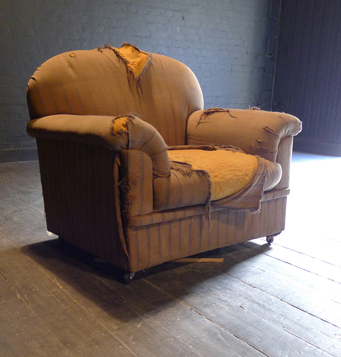
That was Owl – Part One

So on Friday we finished up Owl at the Intimate. We’ve stowed the armchair until June when we head up to Grahamstown for the National Arts Festival as part of the Cape Town Edge. I was really nervous about this run and went through a lot of dark moments but ultimately it was a success. Many aspects could have gone better, and I have definitely learned a lot. As promised I’ll be sharing a break down of the process here. At times it may not be the most orderly, since I’m going to be posting chapters as I write them, rather than creating a master report as I would with a project like the Cape Town Edge. So bear with me and if there is anything you’d like me to elaborate on then email me or post a comment.

First some  general thoughts…

Probably the most persistent brain tickler that Owl has brought up for me is the question of how success is defined. I’d categorise it under the headings of:

Personal – am I happy with how I did? My writing, directing, design, PR work. I am constantly plagued by the voice in my head telling I could have done better. I think a lot of us know that voice. I try not to ignore it and rather ask it, ‘OK, how?’

Critical – What did people say about the work? The reviewers and the people you respect whose brain you pick over a cup of tea two weeks later.

Financial – This is very much bound up with getting audience into the theatre. Looking at a budget, did I make back my costs? After that if divide my portion of the profits did I make more per hour than I did working as a store clerk? Do I have enough to do it again and also buy the groceries this week?

Professional – Thinking long term, has this helped your career? Did the Gatekeepers see it? Is it another line on a CV? Quite a tough one to judge as the ripples a production makes can sometimes only be discovered years later.

So here’s Part One of the report back on Owl.

The big facts of the production are two numbers: R3 131 and R13 980; Costs and Income.

Costs were kept extremely low – we operated on a profit share so the fees for Briony, Brydon, Fiona, Gabi and me are not included. Neither is the hire fee for the Intimate which is 10% of the door. The cost allocation looks like this:

The lion’s share was clearly the money spent on marketing. This included a professional photographer to take shots for the poster and profiles of the team, printing 18 A3 full colour posters, 1000 business card ‘flyers’, and the opening night catering – an area I will in future cut down on (more on this in Part 2). I think this is a fairly good idea of what proportions you should be spending in, even if you adjust the particulars for your strategy.

The publicity was done by myself, which I do not recommend (I recommend THIS) – but which had to be the case. I tried to find the dream publicist but the first marketer I sat down with simply couldn’t take on the project and turned me on to another, likewise unable to help. These two were my first choices as antidotes to the ‘usual’ publicists and my attempt to get new audiences in. When they fell through I tried one of the best theatre publicists in Cape Town who I have worked with before. Unfortunately she was on vacation. My fourth meeting and tenth cup of tea with a potential publicist really excited me and we agreed to work together. For reasons I’ll never really understand she left me hanging for ten days before I realised she was overcommitted and couldn’t deliver. By this stage I was desperate to get out my press releases. Rather than waste time searching for another choice (even a day would have been a waste as I was 2 weeks to opening night) I decided to do it myself.

I took it on because I have the resources, the energy and have spent a lot of time thinking about marketing. Even then I knew that a lot of the great ideas and tips I’d talked about with the potential publicists would have to fall by the wayside. That I got the audience I did is more a validation of the system and the building blocks of PR strategy than any credit to myself.

This is the audience I got:

Slow first week dominated by complimentary tickets. Skyrocketing the second week. Why? Reviews. All told, about 380 people came to watch Owl. Not bad.

For the next post I’ll elaborate on the Marketing Strategy and focus on the fundamentals – which I never go much beyond this time round.

Punching Theatre in the Face

People are trying to save theatre all the time. I recently sat in a circle of shell-shocked arts administrators at the PANSA Western Cape offices in Salt River and saw the zeal glinting from underneath the exhaustion. They try to grow theatre in townships and preserve particular art forms like dance, puppetry or spoken word. They battle bureaucracy and antipathy. Many of them started in the ‘industry’ as artists, gradually realising that art depends on someone filling out forms and sending out fifty emails a day. They wrestle and they keep going – some of those present represented companies that have been operating for over 20 years, each year entirely uncertain. Looking around that circle it’s hard to lay the blame on the arts administrators for the dearth of funding allocated every year.

Not represented except by myself were the ‘independent’ theatre makers (I can’t the label ‘independent’ seriously. I depend on so many people willing to do favours and take risks that I am more dependent than any company able to raise funding). It’s not that they couldn’t benefit from a workshop on fund-raising; it’s that they don’t believe in the funding system. I know I don’t.

Independents rely on a forward momentum to build in their careers. They start off shoving hard against a Sisyphean boulder; sweating and losing money they earn working for the establishment. Eventually people start calling them, start arriving at their openings and experiments and offering them better jobs, roles, collaborations, etc.

But neither of these strategies counts on the audience arriving.

The wild card ‘independent’ theatre makers try to get people with money to love theatre, and try enticing the intelligentsia and that massive stratum of Cape Town’s young middle class, the designers and advertisers.

However they will fail. And it’s not entirely their fault.

Newspapers and some radio stations maintain an interest in the theatre world and it’s possible to draw an audience through these narrow canals alone. However, they are reaching the people who already like theatre, who read the paper looking for a show to watch. My crisis of marketing is not how to reach those people (although on my list of things to work out is: ‘how to reach them sooner’) but how to reach the intelligentsia, the hipsters, the wired generation. I’m looking specifically for vectors that (in the words of the PR Institute of SA) objectify the information. Word of mouth is more valuable than a flyer not because you pay nothing for it, but because you can’t pay for it.

But what do we do when reviews become homogeneous? Surely positive feedback is good for marketing? Yes and no – if no one disagrees with your opinion then no one is listening. A hard statement, but if theatre is to be relevant then a spectrum of critical opinions must exist and they must be accessible. So I am left with this conclusion: I want people to criticise my work and to do so vocally. However, some reviewers will hold back a negative engagement because they feel it’s impolite or under the mistaken idea that their silence is a favour. I know some theatre makers and companies who believe that is true. I am not one of them, and I am just arrogant enough to believe I’m right about this.

There are people who are trying to save theatre and so they treat it with kid gloves. I think theatre needs to get smacked in the face a couple of times.

So, with thanks, I link to Scarlet’s review of Owl.

Reviews for Owl

Owl was invited to the Brighton Fringe Festival (UK) where it was one of three shows nominated for Latest’s Best International Performance.

Reviews are arranged from the most recent backward.

“Some shows are easy to fall in love with; this is one of them. A Girl Called Owl is a sweet, poignant coming-of-age story.”

5 stars – Darren Taffinder, Fringe Guru

“In this powerful one-woman play, Briony Horwitz portrays Olivia, the new girl in town, who we meet firstly aged ten and later aged 16. With just an armchair for a prop, Horwitz athletically climbs and stretches with all the agility of the child she is playing.”

– Tania Deaville, The Argus (Brighton, UK)

“Here is a lovely, rich sense of the physical environment conveyed through the writing and the telling. Briony Horowitz’s portrayals are vivid and her edits clean. She has great skill and obviously feels a real affinity with Jon Keevy’s material”

– R. Blackman, Fringe Review

“This is an absolutely charming monologue, performed by a brilliant actress with well-honed skills in multiple characterisation and in leading her audience on a beautifully-crafted narrative arc. The utter simplicity in set and costume design focus our attention in on the essential element of the theatrical experience – the pure art of storytelling.”

 5 starsLove Fringe

“A Girl Called Owl makes skilful use of the power of storytelling… It is simply a pleasure to watch.”
– Ellen Carr, A Younger Theatre
.
“This powerful one-woman play, was performed wonderfully as Briony Horwitz delivered a vivid storytelling experience. As she slipped from one character into another, bringing each one alive through accents, gestures and mannerisms, she recounted the story of a 10 year old girl, Olivia aka Owl.”
– Dade Freeman, Krysalis
.

“Horwitz delivers an enchanting performance. Her versatility as an actress is astonishing and her effortless handling of so many characters is to be applauded…. moving and evocative”

 – Tracey Saunders, Cape Times

“Owl doesn’t let you escape. Instead it draws you in and hypnotizes you with its apparent simplicity. Briony plays a slew of characters with a seamless breathless ease that had our eyes transfixed to her every movement. The stage is bare apart from a battered sofa which she uses and abuses as she lives through her characters. Fiona Du Plooy’ choreography is uncanny, a little distressing, but mostly mesmerizing as she directs Briony’s slender body through her agonizing and exhilarating moments.”

 – Astrid Stark

“Sy is ewe tuis in kinderlike onskuld en uitdagende tienergedrag. En alles word met empatie gedoen…..Die vertolkings en teks is selfloos.”

 – Mariana Malan, Die Burger

“Briony handles numerous characters with clarity and depth. Her vibrant imagination and deft handling of the image-laden text is enchanting.

“Keevy’s writing is delightful. It is full of punch and flow and sparkle. It is insightful and universal and touching and smart.”

 – 3Way Stop, The PonyRoach Review

“Beautifully observed writing makes this piece totally delicious. I usually hate grown-up actors pretending to be children, but here, Briony is strong, and unusual, and has an innocent integrity that manages to pull it off.”

 – Megan’s Head

“For all its beauty, Owl is a play that pulls no punches. Its themes are both innocent and brutal simultaneously. Coming of age is never easy, never idealistic. Keevy explores this without fear or prejudice, and with a great deal of honesty.”

 – Clifford Graham, the Monday Missile

“The skill and talent partnership of writer/director Keevy and actress Horwitz elevates Owl to more than just a mere coming of age story. It invites you in, to such an extent that you unknowingly laugh and cry along with Owl and Kay as they grow both closer and apart. You find yourself holding your breath as Owl utters the powerful final words … that you must go hear/feel for yourself.”

Theatre Scene Cape Town

“Owl a feather in Horwitz’s cap….4 stars”

 – Theresa Smith, The Cape Argus

And Some interviews with Briony and/or I: Daniel Derckson for Bizcommunity,