All My Myths are Copyrighted

I wrote the following article a while back and it was posted on my old blog and the Mixtape Blog . I’m putting it up here because I like it and don’t want to forget it.

Hasbro. DC. Marvel. Disney. They’ve got them all locked down. Every childhood legend and league of disproportioned heroes and villains. Back when people told stories around firepits and under stars no one could tell you the real story. Pretty often some wise guy who thought he could top the last tale might claim to have the real story – but he’s just a showboating sonovabitch. He knows about as much as any other guy. The teller who gets to be right isn’t the one closest to what came before, but closest to what comes after. The story that gets repeated is the story that gets to be real. And that was the way it was for a very long time.

Stories keep evolving – survival of the fittest. But there’s no place for evolution in a production line. Take chickens for example. The humble chicken, by virtue of being tasty, flightless, easily domesticated, nutritious and easy to breed, has been kept in more or less the same state for hundreds of years. The only changes to the chicken have been to bulk it up to produce more meat and breed better egg layers. Change is not evolution – evolution can be surprising. So we now have battery farmed chickens, have done for just under a century. The chickens are controlled and bred selectively – some are even copyrighted. And we all can have access to the same fowl feast.

My mythology – the heroes I dreamt about when I built worlds out of stones and sticks – are battery chickens. Bloated and making some investors happy. The stories I got don’t belong to me, I don’t even think they were rented out to me. If this was around a firepit under stars and Hasbro had just finished telling a story about Optimus Prime and the All Spark, I would get up and say, wait a minute, listen here because I’ve got the real story – see the All Spark wasn’t the real creator, somebody made it. A bazillion years a–

HEY YOU SHOWBOATING SONOVABITCH! YOU SHUT YOUR DAMN MOUTH BEFORE MY LAWYER LEROY HERE SHUTS IT FOR YOU!

That Hasbro – he’s a dick. And he’s locked up all the dreams in battery farms. And just like in battery farms, more productive is the goal, not better. Legally who ever tells a story owns the characters that are created through it – as long as those characters are distinct enough. And, as in any case of ownership, the rights to that character can be transferred. Fair enough that you tell a story and people who make money from retelling that story owe you something, and fair enough that people shouldn’t be allowed to stop you making money from telling your story. But there comes a point of cultural saturation when that character must take on a life of its own. By which I mean a return to the firepit nights of old. May the best story win. This is the way it is for Sherlock Holmes, Hercules, Robin Hood and King Arthur – why not for Superman, Snake-Eyes and Optimus Prime?

BECAUSE I OWN THE RIGHTS TO ALL DERIVATIVE WORKS AND LEROY HERE WILL PUT YOU INTO THE GROUND IF YOU TRY TELL PEOPLE A STORY WITH MY GIANT ROBOTS IN THEM! YOU WANT TO TELL A STORY ABOUT GIANT ROBOTS? RIP OFF THE FUCKING GOBOTS.

I have more legal right to use Jesus in a story than Superman. Corporations are more powerful than church. Maybe.
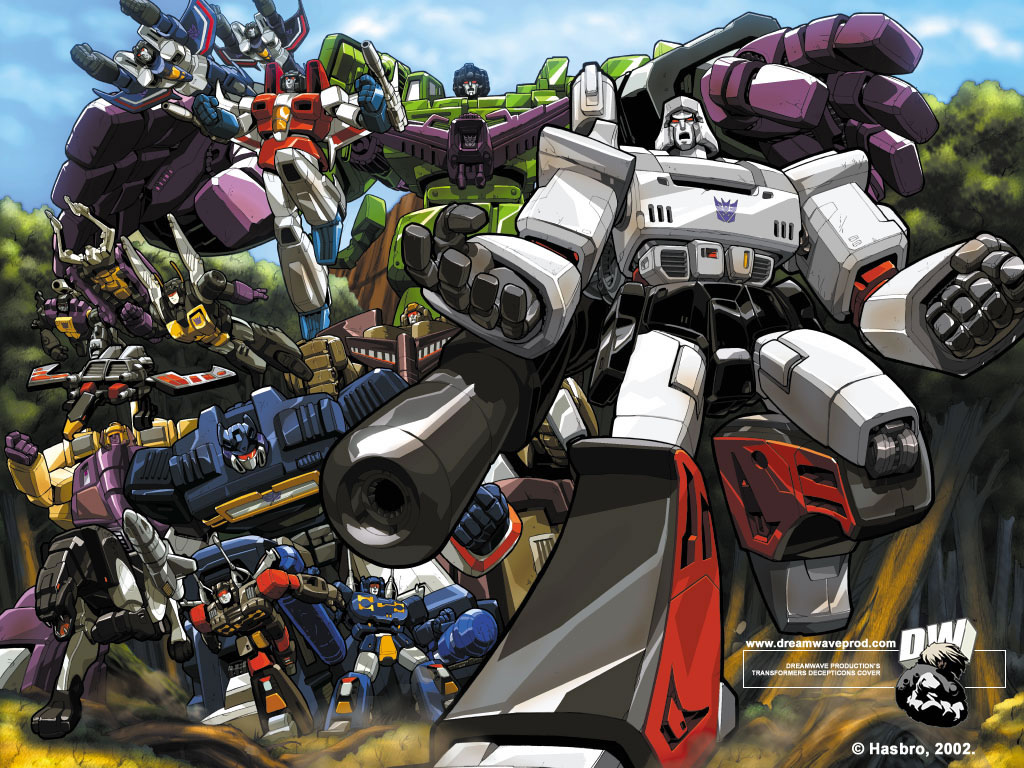
What childhood looked like from inside my head.
How to Sell Yourself

Think positive. Act confident. Highlight your good points.

Today I was reading the Cape Times and in one article about fracking they referred to the Karoo brand. Not about the brand of spring water, or hotels or something – just the Karoo, it’s a brand. That’s the world we’re in today.

We are in an age when interconnectedness makes infinite variety possible and yet instead jargon and practices are becoming homogenized. Art should be exploding into that realm of potential but instead the systems of capitalism have spread like a monkey-borne lung-melting virus. Branding, marketing, selling. That is what we do as creatives. And we do it in the same way as every other salesman.

Tweets, updates, blog articles – be positive, be interesting. Don’t be critical, don’t be challenging. Take whatever publicity anyone offers, if you’ve been in business 6 months it’s a perfect time to get celebrated as a success. And the press will help you. They are hungry for a success story since the depressing daily grind of most artists won’t make it past their editors.

Spin, spin, spin. Get dizzy, fall over.

What is the point of art if we don’t care about the truth? We can add adjectives to everything we say and write to make it upbeat, fabulous, sexy, funky, cutting-edge, awesome, ground-breaking, successful and amazing but that doesn’t change the industry. I look around at South African theatre and I see a dire situation. Too many clubs and cliques and not enough audience. We are irrelevant to 99% of the city. We’re too busy telling ourselves we’re thriving to really think about changing. That’s the danger of the ‘we are awesome’ marketing strategy – you start to believe it before the audience does. And of course the other problem is that everyone else is doing it too.

I’m deadly serious. We have 2 strategies of marketing theatre in Cape Town, ‘we are awesome’ and ‘it’s theatre’. The Fugard gets a little better by knowing who they’re selling, ‘it’s Athol Fugard’ or ‘it’s Sir Anthony Sher’.

Maybe I’m not angry that we’re so infected by marketing speak. Maybe I’m angry because we’re so infected and yet still are doing it badly. Can’t we bring the interesting, honest, creative spirit off the stage for a minute and ask it to talk to the press? Or write a press release? All the craft that’s put on stage is wasted if it is not met by an equal craft in the selling of the show. How can we take risks on stage when we aren’t willing to take risks off it? With our reputations, with the status quo, with our money.

Selling doesn’t have to be compromise. Selling isn’t compromise. And that we think the only way to get audiences into our work is to create indistinguishable brands and mutual appreciation societies shows that we are not the challenging, creative, daring industry we like to pretend we are.


Surviving the Festival

The truck, all locked and loaded. Photo: Amy Jephta

Survival. Supposedly it’s for the fittest. In that case I really didn’t expect to still be standing after the festival, but though I’m out of breath I am still breathing. I went up this year with London Road and the ladies conquered St Andrew’s Hall and the fest generally (I’m not sure of the final figures, but London Road looks to have taken the title of highest grossing production this year). But the real sweat had come before the festival began with the preproduction for the Cape Town Edge.

For a little back story: Tanya from FTH:K had approached Tara and me to run the Edge in 2011 at the end of last year; we accepted and set about planning, with Tara bringing fellow Pink Coucher Mat Lewis in.  We divided the project up as best we could; my portfolio was the budget and marketing materials. As Tara’s schedule began to fill up with amazing opportunities we brought in Fiona Gordon to be our Tara surrogate. But enough about them… back to me.

Marketing materials boils down to all the print and web media and making sure it could be accessed by the groups and by interested press people. So we started small with a revamp of the CTE logo and built up through posters, press kits, badges, flyers, facebook pages, a blog and then to the hardest part: the Booklet. I went a little mad. What I’m most proud of if kicking the ass of skeptics who believe that Photoshop is a bad choice to do a booklet in. Using my full knowledge of the program (and learning a couple of new tricks) I worked out a damn efficient method. I now know that anyone who tells you it can’t be done is just someone who can’t do it (put that on an inspirational poster).

During the fest itself I stepped back from the Edge and let Mat and Fiona handle things. Mat is an exceptional and imaginative techie, which is a shame considering how gifted he is as an actor, and got everything running smoothly inside while Fiona and Dani Le Chat made the outside fun and funky.

But all the hard work would have meant very little if it wasn’t for Mark from Fushin. He is a legend and saved the day, bringing in amazing tents, delicious hot food straight from a mobile kitchen and, best of all, a liquor license.

It wasn’t all fun and games though. On the drive up the Nic Danger team were in a car accident and had to cancel the show. There was a lot of confusion that first day and the feeling was that the slot was a loss. But as it became clearer what everyone’s injuries were a spirit of togetherness kicked in. Trent was the worst injured and he was flown back to Cape Town. The remaining ninjas banded together and decided to use all their contacts to put together a comedy variety show. Lots of comics and performers came to the party, giving their time to look silly on stage to help raise funds to pay for Trent’s hospital bills. It was really a moment of feeling that the theatre is a community, not an industry. Other artists and producers made donations direct to the hospital. So, a big thank you to all everyone and especially to the audiences. Thank you a thousand times.

So we survived. Now to start planning for next year…

Art is the word

Irony used to be smart. Now it's just hairy.

Art. Possibly the most contentious piece of polysemy in my orbit, it’s a staple of late night beery rants. A recent one I listened to was the decisive and slightly slurred differentiation between Art and Craft. So I got talking in defense of crafts as arts and later I got round to actually thinking about it. Why Art is so provocative in its multiple meanings is twofold; the first thing is that ‘art’ can be either the personal journey of improvement through practice and innovation or it can be the cause of visceral emotional or intellectual upheaval in the audience. The debate around this second meaning is fraught with PhDs and many, many books and drunken pontification. My view is very much informed by John Carey’s What Good are the Arts, which I read a year ago. In it Carey does an amazing job of tearing down various definitions of Art. Unfortunately his own attempts are not much more useful.

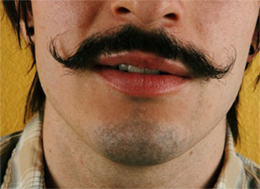
You see, it all hinges on the article, the definite one. ‘The Art’ is different to simply ‘Art’. For instance I could discuss the art of origami, and only an ironically mustachioed dude would try to correct me and call it a craft. Unfortunately there are many in Cape Town, fortunately I don’t hang out at the Power and the Glory so I’m mostly safe. The contrast between referring to ‘the art of painting’ and ‘a painting as art’ is certainty versus uncertainty, objectivity versus subjectivity. Why is that? Why are they different? Returning to the Mustache, such a dude wants to collapse the multiple meanings of the word Art into a single meaning of religious potency, never mind the world demands ambivalence at least from any signifier. Maybe that’s OK though, since he’s trying to boil it down to its most contentious one: Art as the indefinable label.  Such people thrive on irony.

For myself I go the other way. I’d rip the nebulous definition down off its pedestal. I’d consign it to nothingness because ultimately it is so subjective, so indefinable, that it almost ceases to be useful. It is the x in algebra that only ever equals another x. A term that’s fine to have around as long as no one looks directly at it. Earlier I said it meant the cause of visceral emotional or intellectual upheaval in the audience. The closest Oxford gets to agreeing with me is: ‘5. Excellence or aesthetic merit of conception or execution as exemplified by such works’, which can pretty much be sliced any way you like it. It gives a definition that depends on a value system. But on whose?

As Carey shows us, it’s easy to tear down other people’s definitions or the value systems that underpin them, but it’s nearly impossible to replace them. Yet Art does exist. In artifacts and experiences, both deliberate and accidental. Yesterday I walked across the city bowl, the air was clear and cold and I was hung over. The combination of my inner psychological and physiological state with the sharp focused urban landscape was an indelible experience. Was it Art? Can being alive be Art? Perhaps Art simply hangs at the ends of the moments when we ask ourselves, “What was that?”