How to Sell Yourself

Think positive. Act confident. Highlight your good points.

Today I was reading the Cape Times and in one article about fracking they referred to the Karoo brand. Not about the brand of spring water, or hotels or something – just the Karoo, it’s a brand. That’s the world we’re in today.

We are in an age when interconnectedness makes infinite variety possible and yet instead jargon and practices are becoming homogenized. Art should be exploding into that realm of potential but instead the systems of capitalism have spread like a monkey-borne lung-melting virus. Branding, marketing, selling. That is what we do as creatives. And we do it in the same way as every other salesman.

Tweets, updates, blog articles – be positive, be interesting. Don’t be critical, don’t be challenging. Take whatever publicity anyone offers, if you’ve been in business 6 months it’s a perfect time to get celebrated as a success. And the press will help you. They are hungry for a success story since the depressing daily grind of most artists won’t make it past their editors.

Spin, spin, spin. Get dizzy, fall over.

What is the point of art if we don’t care about the truth? We can add adjectives to everything we say and write to make it upbeat, fabulous, sexy, funky, cutting-edge, awesome, ground-breaking, successful and amazing but that doesn’t change the industry. I look around at South African theatre and I see a dire situation. Too many clubs and cliques and not enough audience. We are irrelevant to 99% of the city. We’re too busy telling ourselves we’re thriving to really think about changing. That’s the danger of the ‘we are awesome’ marketing strategy – you start to believe it before the audience does. And of course the other problem is that everyone else is doing it too.

I’m deadly serious. We have 2 strategies of marketing theatre in Cape Town, ‘we are awesome’ and ‘it’s theatre’. The Fugard gets a little better by knowing who they’re selling, ‘it’s Athol Fugard’ or ‘it’s Sir Anthony Sher’.

Maybe I’m not angry that we’re so infected by marketing speak. Maybe I’m angry because we’re so infected and yet still are doing it badly. Can’t we bring the interesting, honest, creative spirit off the stage for a minute and ask it to talk to the press? Or write a press release? All the craft that’s put on stage is wasted if it is not met by an equal craft in the selling of the show. How can we take risks on stage when we aren’t willing to take risks off it? With our reputations, with the status quo, with our money.

Selling doesn’t have to be compromise. Selling isn’t compromise. And that we think the only way to get audiences into our work is to create indistinguishable brands and mutual appreciation societies shows that we are not the challenging, creative, daring industry we like to pretend we are.
 

Art is the word

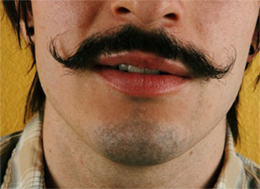
Irony used to be smart. Now it's just hairy.

Art. Possibly the most contentious piece of polysemy in my orbit, it’s a staple of late night beery rants. A recent one I listened to was the decisive and slightly slurred differentiation between Art and Craft. So I got talking in defense of crafts as arts and later I got round to actually thinking about it. Why Art is so provocative in its multiple meanings is twofold; the first thing is that ‘art’ can be either the personal journey of improvement through practice and innovation or it can be the cause of visceral emotional or intellectual upheaval in the audience. The debate around this second meaning is fraught with PhDs and many, many books and drunken pontification. My view is very much informed by John Carey’s What Good are the Arts, which I read a year ago. In it Carey does an amazing job of tearing down various definitions of Art. Unfortunately his own attempts are not much more useful.

You see, it all hinges on the article, the definite one. ‘The Art’ is different to simply ‘Art’. For instance I could discuss the art of origami, and only an ironically mustachioed dude would try to correct me and call it a craft. Unfortunately there are many in Cape Town, fortunately I don’t hang out at the Power and the Glory so I’m mostly safe. The contrast between referring to ‘the art of painting’ and ‘a painting as art’ is certainty versus uncertainty, objectivity versus subjectivity. Why is that? Why are they different? Returning to the Mustache, such a dude wants to collapse the multiple meanings of the word Art into a single meaning of religious potency, never mind the world demands ambivalence at least from any signifier. Maybe that’s OK though, since he’s trying to boil it down to its most contentious one: Art as the indefinable label.  Such people thrive on irony.

For myself I go the other way. I’d rip the nebulous definition down off its pedestal. I’d consign it to nothingness because ultimately it is so subjective, so indefinable, that it almost ceases to be useful. It is the x in algebra that only ever equals another x. A term that’s fine to have around as long as no one looks directly at it. Earlier I said it meant the cause of visceral emotional or intellectual upheaval in the audience. The closest Oxford gets to agreeing with me is: ‘5. Excellence or aesthetic merit of conception or execution as exemplified by such works’, which can pretty much be sliced any way you like it. It gives a definition that depends on a value system. But on whose?

As Carey shows us, it’s easy to tear down other people’s definitions or the value systems that underpin them, but it’s nearly impossible to replace them. Yet Art does exist. In artifacts and experiences, both deliberate and accidental. Yesterday I walked across the city bowl, the air was clear and cold and I was hung over. The combination of my inner psychological and physiological state with the sharp focused urban landscape was an indelible experience. Was it Art? Can being alive be Art? Perhaps Art simply hangs at the ends of the moments when we ask ourselves, “What was that?”

Fugard at the Fugard

a post that’s actually about writing and not really a review at all

Drive or walk around the city and you can see my work. A blazing sunset with a thorn tree silhouetted against it. Three small figures can be seen under it, while a flock of birds pass overhead. “Athol Fugard’s The Bird Watchers” the title states in letters taller even than municipal regulations would have them. It’s not the kind of poster I generally like, I’m not a fan of landscapes and the iconography is a touch too clichéd (I should probably mention that I am the designer, but I’ll leave that hanging). But it does make sense in the context of the story Fugard tells, if not with the scenography of Saul Radomsky. Fugard is a writer driven by the wisdom: “write what you know” and in the Birdwatchers he draws on the setting and memories of his conversations with Barney Simon and Yvonne Bryceland. The Central character is Garth, a writer revisiting a time with Lenny, a director, and Rosalyn, an actress. But these roles don’t sum up the relationship between the 3 of them. The play comes in two acts split by an interval and an understaffed scene change. The first half is set in the real world, under the unGwenya tree of Garth’s home and the second is a return to that place and time by an aged Garth in his imagination. The stark simplicity of the stump of the tree and the sear decay of his re-imagined home was biting. The story is a self-flagellation as Garth regrets words, attitudes, selfishness and wasted potential. What I found to be greatest flaw and also the most thought-provoking aspect of the production was this self-absorption, a feedback loop of pain. At one pointed I wanted to give Uncle Athol a hug, in part because a lot of his cutting words I’ve used on myself many times.

There’s this tremendous ego at work when I’m writing.  I’m creating a world of events that I think, believe, know are fascinating to others, are relevant, important and irreplaceable. Did I say Unique? Yes, I believe that too. Against the cacophony of cries that nothing is original, I believe my work is. We are all snowflakes. All writers believe it although they don’t all admit it.

I wasn’t absorbed by the story on stage, either emotionally or intellectually and at the close I wasn’t moved to my feet. But the naked self-portrait followed by the man himself blew the top off my head. Fugard emerged to handle the Q&A with a sneaky and witty answer to anticipated questions of autobiography: he was wearing the same clothes as the character Garth. Justin Cartwright lead the Q&A with Fugard, but we struggled to hear our host, even though Fugard was as clear as the actors had been.

Essentially my thoughts were caught up in this question: Why do we write what we write? Fugard tackles this quite early on. “Love her.” He tells us, referring to all the ugliness, despair and human decay the world has, personified for him in an encounter with a homeless woman. This idea, that writing needs to be driven by compassion, clicked for me. Looking at the plays I’ve seen recently I think that audiences have always known this. While the political satires become shrill or petty and the beautiful, witty pieces of escapist fantasy struggle to be understood, stories of simple compassion genuinely touch people. Look at London Road, look at …miskien. When writing doesn’t let itself love something, or when the director doesn’t see it or the actor doesn’t feel it can still be a lot of things, but it can’t change the audience.

There are a lot of other ideas I’m still processing, about performance styles, politics and morality. For now, let’s leave it on the lesson learned.

“Love her.”